
Table of Contents
Share to others
Overview
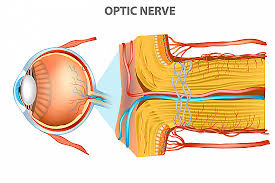
Optic Nerve Atrophy and its Homoeopathic Treatment.
Optic nerve atrophy is condition where the optic nerve, which transmits visual information from the eye to the brain, homoeopathic treatment is now offering a ray of hope for patient. In this blog we will discuss what optic nerve atrophy and how homoeopathy can play a promising role in its treatment.To understand optic nerve atrophy, it is essential to first have a clear understanding of the optic nerve itself
What is optic nerve
The optic nerve, also known as cranial nerve II, is the second of twelve cranial nerves. It plays a vital role in vision by transmitting visual information from the retina (the light-sensitive tissue at the back of the eye) to the brain. It functions purely as a sensory nerve, carrying signals that the brain interprets as visual images.
Anatomy of the Optic Nerve
The optic nerve is made up of more than 1 million nerve fibers, which are the axons of retinal ganglion cells. Its anatomy can be divided into four main segments:
Intraocular Part
.
Length: ~1 mm
Location: Begins at the optic disc inside the eye
Features: The nerve fibers exit the retina here, forming the beginning of the optic nerve.
Infraorbital Part
Length: ~6–10 mm
Location: Passes through the optic canal in the sphenoid bone
Features: Travels with the ophthalmic artery.
Intracanalicular Part
.Length: ~6–10 mm
Location: Passes through the optic canal in the sphenoid bone
Features: Travels with the ophthalmic artery.
Intracranial Part
Length: ~10 mm
Location: Inside the cranial cavity
Features: The two optic nerves meet at the optic chiasm, where fibers from the nasal half of each retina cross to the opposite side. The fibers then continue as optic tracts toward the brain (specifically, the lateral geniculate nucleus of the thalamus).
Blood Supply
Supplied by small branches from the ophthalmic artery, central retinal artery, and pial vessels.
Poor blood supply makes the optic nerve vulnerable to ischemic damage.
Function
Transmits visual signals from the retina to the brain.
Carries information such as light intensity, color, and spatial resolution.
Color of the Optic Nerve
The optic nerve itself, when observed in a living human or in anatomical dissection, is generally:
Grayish-white in color.
.Why Grayish White?
The optic nerve is made up of myelinated nerve fibers, and myelin (a fatty substance that insulates nerve fibers) gives it a white appearance. It may appear slightly grayish due to the dense packing of fibers and the surrounding connective tissues.
At the Optic Disc (as seen in eye exams):
The optic disc, where the optic nerve enters the retina, appears pinkish to pale yellow when viewed with an ophthalmoscope.
Pinkish color = healthy blood flow.
Pale color = possible optic atrophy or damage.
The optic nerve is a crucial part of the visual system. Its main function is to transmit visual information from the retina (the light-sensitive layer at the back of the eye) to the brain.
Function of the optic nerve
Visual Signal Transmission:
The optic nerve carries electrical impulses formed by the retina (in response to light) to the visual cortex of the brain, where they are interpreted as images.
Visual Field Processing:
Each optic nerve carries information from one eye, contributing to binocular vision and helping the brain interpret depth, contrast, and spatial awareness.
Light Reflex Regulation:
It helps control the pupil’s response to light (pupillary light reflex) by sending signals that trigger constriction or dilation.
Color Vision and Detail Recognition:
It helps transmit fine details and color information, especially from the central part of the retina (macula), essential for activities like reading and recognizing faces.
Optic nerve atrophy and homeopathy treatment
The optic nerve is composed of numerous neurons, much like a thick cable containing many fine wires. Similarly, the optic nerve is a bundle of fine nerve fibers that serve as a critical bridge between the eyes and the brain. If, for any reason, the fibers or the overall structure of the optic nerve begin to deteriorate or become damaged, it starts affecting the communication between the eyes and the brain. As a result, the person’s vision begins to decline.
When the optic nerve is affected, it starts turning pale and its blood supply reduces—this condition is referred to as optic nerve atrophy. The term “atrophy” in simple language means wasting away or degeneration. To understand it better, consider the example of a plant: its roots absorb water and nutrients from the soil and transport them upwards to nourish the entire plant. If, for some reason, the roots get damaged and can no longer supply adequate nutrition to the plant, its leaves begin to turn yellow and the plant starts to wither.
A similar process occurs in the body. Atrophy can happen to any organ or nerve—whether it’s the optic nerve, the testicles, or even muscles. Sometimes, patients even report that their auditory nerve (related to hearing) seems to be “drying up,” or they may experience muscular atrophy. Essentially, atrophy refers to the shrinkage, weakening, or loss of function of an organ or tissue due to reduced blood supply or nutritional support.
There are multiple possible causes of optic nerve atrophy. However, we will not cover those causes in this article—they will be discussed in a separate post.
Role of Homoeopathy In Optic Nerve Atrophy Treatment.
According to mainstream medical literature and even reliable international medical websites, optic nerve atrophy is generally considered irreversible. It is commonly stated that once vision is lost due to this condition, it cannot be restored. The current medical focus lies in preserving the remaining vision and preventing further deterioration.
However, in our clinical experience in Neuroophthalmology we have observed several encouraging responses to homoeopathic intervention in cases of optic nerve atrophy. As a practicing homeopathic neuro-ophthalmologist, I aim to share my insights and experience with all of you through this platform.
Homoeopathy offers a holistic and individualized approach that may help slow down the progression of optic nerve degeneration and, in some cases, enhance the quality of the remaining visual function. In upcoming sections, we will explore how homoeopathy can play a supportive role in managing this challenging condition.
At Dr. Tanzeem Siraj Homoeopathy Care Center, we have observed several cases of optic nerve atrophy caused by various underlying conditions such as papilledema and optic neuritis. Our clinical experience shows that patients who still retain some residual vision—such as the ability to count fingers, recognize food items on a plate, or detect shadows or movements from a short distance—often respond positively to homoeopathic treatment.
In many such cases, homoeopathy has helped improve or stabilize vision. While some patients see measurable improvement, others may experience stability in their remaining vision, which is also considered a significant achievement in chronic optic nerve conditions. Stabilization of vision is often a key goal, especially in degenerative or non-reversible optic nerve diseases.
However, it is important to note that in advanced cases—where there is no perception of light (PL negative)—homoeopathic medicines have shown limited to no improvement so far.
Our results suggest that early intervention with individualized homoeopathic treatment can offer hope and potentially better outcomes in many cases of optic nerve atrophy
Conclusion
In conclusion, if you are noticing early signs of optic nerve damage or optic atrophy—such as blurred vision, loss of peripheral vision, or effects due to conditions like glaucoma—homeopathic treatment may offer a safe and effective path forward. Many cases have shown that timely intervention with homeopathy can help preserve existing vision and, in some instances, lead to structural improvements in the optic nerve as seen in RNFL tests over 2–3 years.
Our clinical observations indicate that homeopathy may support nerve regeneration and slow the progression of optic atrophy. If you or a family member is suffering from such symptoms, don’t delay. You can book an appointment directly through our website; once clicked, our WhatsApp number will be visible. Share your reports with us, and we will guide you through personalized homeopathic treatment options via online consultation. Early care is key to protecting your vision for the future.
Good sir this will increase awareness in our country as well as whole world people,about optic nerve damage issues,,
Thank you for sharing
kiya petrygium bhi theek ho skta hai
yess in homoeopathy pterygium treatment available
I really like your writing style, great information, regards for putting up : D.